
Dawson County Projected Release Dates
A projected date is a calculated or planned custody end point. It is not proof that a release took place. At the Dawson County Detention Center, a pretrial detainee's exit may depend on bond, dismissal, a new court order, a hold, or transfer. Those events can happen without a public projected-date calculator. The county's JailTracker is current-custody oriented and does not publish an official recent-release feed.
State-prison records use more precise labels. A Maximum Release Date is the date a GDC inmate would leave department custody after serving the full sentence, excluding a parole decision. A Sentence End Date reflects the sentence length, start date, non-running time, and earned credits. A Tentative Parole Month, or TPM, is a Board review timetable. An Actual Release Date records what occurred.
Life and death sentences do not have the same maximum-date treatment under Georgia's sentence-computation definitions. A TPM is also unavailable for some sentence categories. Always read the label beside the date.
Find a Dawson County Release Date
Start with custody type, not a broad name search. The Dawson County release search and record path can establish whether a county booking ended. GDC covers state prisoners. The Parole Board controls parole decisions, while BOP covers federal sentences.
- Check the Dawson County current-inmate roster to learn whether county custody is still shown.
- For a county case, check the court docket for bond, sentence, disposition, transfer, or hold information.
- Request the booking or release record from the Sheriff's Office when the public roster no longer shows the person.
- For a state sentence, search the GDC offender query by name, description, GDC ID, or case number.
- Read Current Status, Actual Release Date, Maximum Possible Release Date, and sentence fields together.
- For parole timing, check the Board's TPM tool, then confirm any final decision with the Board or GDC.
GDC warns that its public service does not warrant completeness. For a disputed date, the agency advises written verification with Inmate Records and Information, PO Box 1529, Forsyth, GA 31029.
The GDC questions about loved ones page identifies Find an Offender as a source for charges, location, and release date.
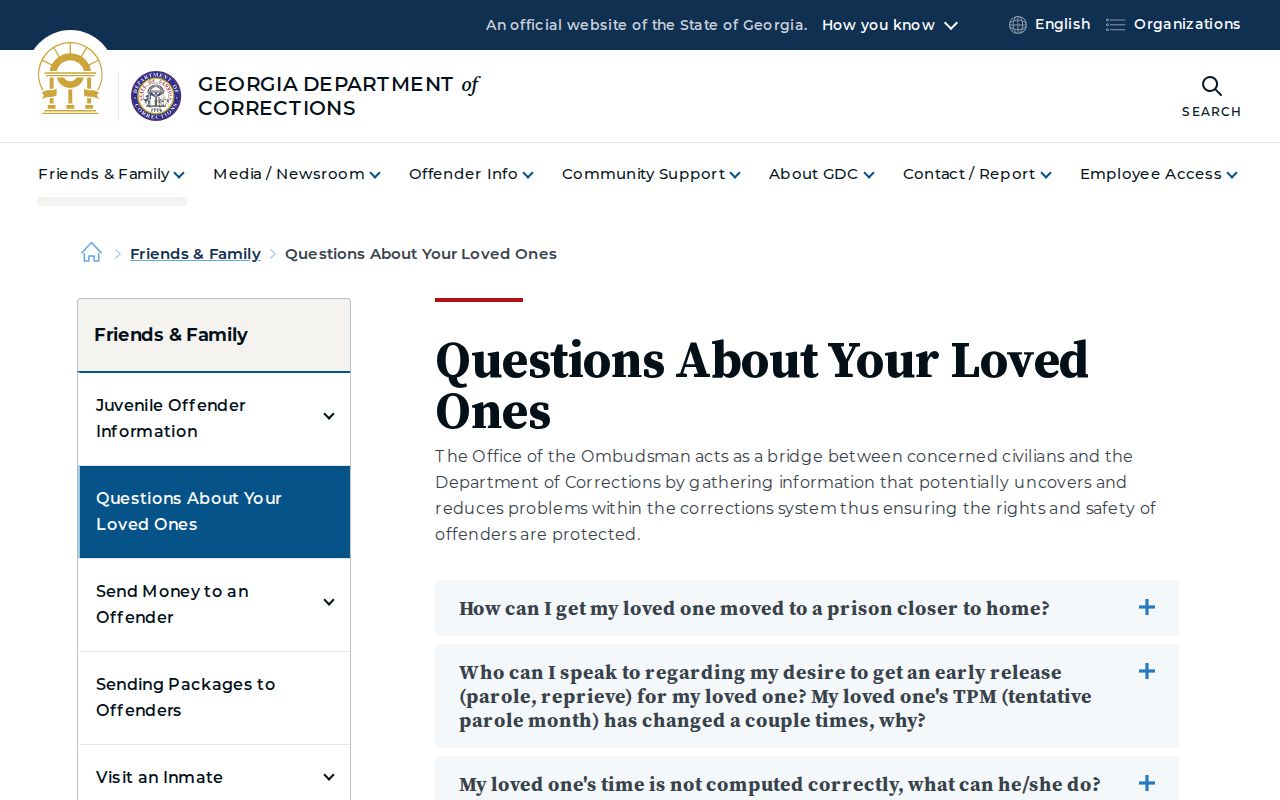
The state guidance applies to a GDC sentence, while Dawson County jail dates still require the jail and court route.
Georgia Credits Affect Dawson Releases
Georgia does not use one universal 85 percent rule for every state sentence. Release timing depends on the offense, sentence type, parole eligibility, credits, and Board action. O.C.G.A. Section 42-5-101 authorizes work incentive credits for eligible felony terms other than life. It recognizes academic or vocational gains, satisfactory assigned work, and behavior standards. Credits can be reported to the Parole Board for its release decisions.
The GDC Performance Incentive Credit program lets eligible offenders earn up to twelve points and potentially reduce a TPM or Maximum Release Date by one to twelve months. The program lists exclusions, including death sentences, terms of two years or less, life sentences, and non-parole-eligible or mandatory-minimum cases.
Credits are not a promise. Eligibility must be established in the actual GDC record, and discipline or failure to meet a program condition may affect the result. County jail calculations are different. The research found no Dawson County public good-time policy or weekend-release rule, so no state-prison formula should be imposed on a local jail case.
Why Dawson Release Dates Change
A release forecast changes when the legal or custody facts change. Some events move the date. Others change where the person goes, which can look like a release from one system without release to the community.
| Factor | Possible effect | Record to check |
|---|---|---|
| Bond or court order | May end county custody sooner | Dawson court and jail record |
| Hold or detainer | May delay exit or cause transfer | Holding and receiving agencies |
| Sentence correction | Changes the computed end date | Court and GDC sentence record |
| Earned credit | May reduce an eligible date | GDC computation record |
| Misconduct | May postpone or cancel a TPM | GDC and Parole Board |
| Parole decision | May set, deny, or revise release | TPM and Board decision |
An immigration, federal, or other-county hold is especially important. Dawson County custody can end through transfer while another agency's custody begins. Ask for the receiving agency when the jail record describes a transfer.
Confirm Dawson County Actual Release
Georgia VINE can send email, text, or phone notices for supported custody events. The Dawson County VINE Inmate Check explains registration and the phone PIN. VINE is useful for a pending change, but it may not show the release reason, sentence computation, booking sheet, or court disposition.
For county jail release, request the public booking and release record from the Dawson County Sheriff's Office. Include the person's full name, date of birth if known, booking or arrest date, and case number. Ask for the release date, release time if maintained, release reason, releasing authority, and receiving agency if transferred. Then compare it with the court docket.
For a Georgia prison release, compare GDC's Current Status and Actual Release Date with the Parolee Database when parole applies. A federal prisoner belongs in the BOP locator, where dates may change during sentence review and recalculation. These systems cannot be substituted for one another.
Dawson Release Dates for Serious Felonies
O.C.G.A. Section 17-10-6.1 creates special rules for serious violent felonies. For covered life sentences, the law can require at least thirty years before parole or early release, without reduction of that minimum by earned time, work release, leave, or similar measures. The Parole Board also states that covered non-life offenses committed on or after January 1, 1995 require service of the full prison term and are not parole eligible.
This is why a broad percentage estimate is unsafe. The offense date, statute, sentence, and prior record can all matter. A public GDC date should be read alongside the sentencing order and any Board record. The serious violent felony statute supplies the legal category, but the person's official computation supplies the date.
Do not apply these state-prison restrictions to a pretrial Dawson County detainee merely because the charge name looks serious. Pretrial custody and an imposed state sentence are different stages.
Dawson County Parole Timing
Georgia's general parole eligibility statute, O.C.G.A. Section 42-9-45, sets a framework with exceptions. Misdemeanor inmates are generally eligible after six months or one-third of the sentence, whichever is greater. Felony inmates are generally eligible after nine months or one-third, while aggregate terms of twenty-one years or more generally reach eligibility after seven years. Other statutes can change or bar eligibility.
Eligibility is not release. The Board may set a TPM, deny parole, or change a decision before the person leaves custody. The TPM may depend on good conduct and completion of counseling or other conditions. A misconduct report can lead to postponement or cancellation.
The strongest timeline uses three records: the GDC sentence computation, the Board's person-specific result, and the Actual Release Date after the event. That sequence separates a legal opportunity for parole from a planned month and a completed release.
Dawson State Release Search Fields
GDC records contain more than one date, so nearby fields provide essential context. Search results may vary, but public examples include the following release-focused information.
| Field | Meaning |
|---|---|
| Current Status | Whether the GDC record shows present or past custody status |
| Maximum Possible Release Date | Full-term department release forecast, apart from parole |
| Actual Release Date | Date custody ended when recorded |
| Most Recent Institution | Last listed GDC facility |
| Case and conviction county | Links the state record to the sentenced case |
| Sentence length | Basis for computation, subject to other time rules |
Known aliases, GDC ID, physical description, and year of birth help separate people with similar names. Verify a match before relying on any date.
Dawson Jail Versus GDC Dates
A local jail date answers a different question from a GDC date. The Dawson County Detention Center can document when a local booking ended, including release on bond, time served, court order, or transfer. It generally cannot establish the final discharge date for a later Georgia prison sentence. When the jail event was a transfer to state custody, the local release date marks the handoff, not freedom from confinement.
Use the court sentence to connect those stages. The case record identifies the sentence imposed and the authority for custody. GDC then computes its own dates under Georgia rules, credits, non-running time, and applicable parole limits. After release, Actual Release Date and Current Status are more useful than an earlier forecast. If the public fields conflict, request confirmation from GDC Inmate Records and Information rather than substituting a personal estimate.
A person who stayed only in the Dawson County jail may have no useful GDC result. In that situation, the sheriff release record and court disposition are the correct sources.